MAPS
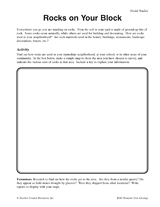
Students make a map of a neighborhood based on where rocks are being used.
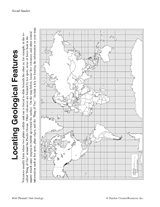
Students make a map of volcanic activity and plate tectonics around the world.
WORKSHEETS
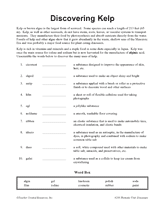
Vocabulary related to properties and uses of kelp is reviewed.
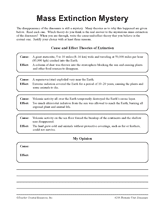
Students speculate about the logical reason for the disappearance of the dinosaurs.
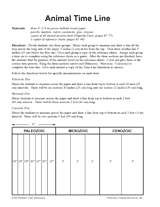
Students create a timeline of the appearance of animals in the ancient world. This is a great science printable for…
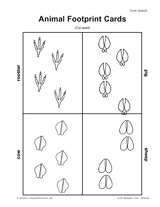
Have students guess which animal's footprints you are holding. Compare animal footprints, and determine which are alike…
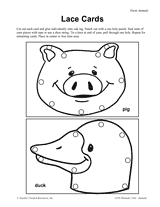
Improve students' fine motor skills with this farm animal lace cards activity.
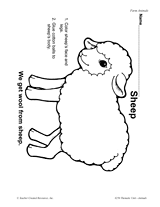
Students can have fun coloring this sheep and gluing on cotton balls for wool!
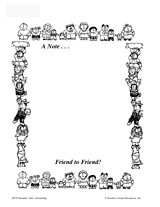
Students can decorate and write a letter to a friend on this note.
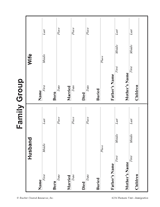
Students research and record basic facts about their family.
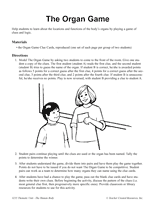
Help students learn about the locations and functions of the body's organs by playing a game of clues and logic.
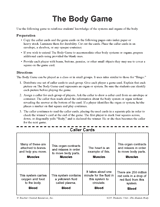
Use this game to reinforce students' knowledge of the systems and organs of the body.
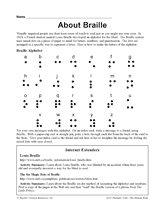
Children practice using the Braille system to write a message to their friends.
Increase your students' sensitivity to physical impairments with these role playing activities.
Students are challenged to write about courage.
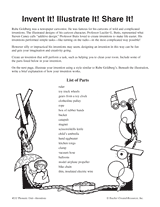
Students imagine an invention that will help them perform a task, then design and illustrate the invention.
Students use their creativity to invent new endings to Ben Franklin's famous maxims, and create their own almanac.
Print a worksheet that details the invention of the popsicle and a recipe for iced-pops.
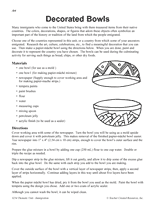
Students create a bowl that celebrates one of the cultures represented among immigrants in America.
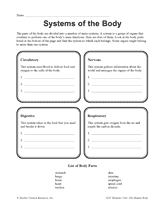
Students match human organs with the body systems they belong to.
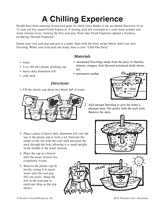
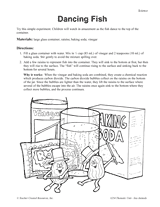
In this fun science activity, kids watch a fish dance in vinegar and baking soda.
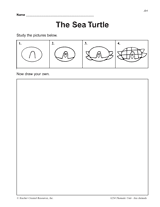
In this art activity, students follow the instructions to draw a turtle.
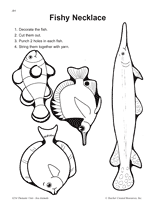
Students make a necklace with fish shapes they color.
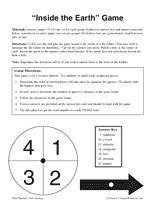
Students must recall geology facts to play a board game.