TEACHING RESOURCE
Read about the Emancipation Proclamation, which was issued by President Lincoln on September 22, 1862.
Slavery was an American Holocaust.
WORKSHEETS
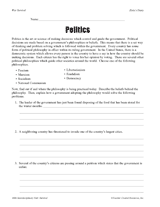
Students consider how to apply different political philosophies to various situations.
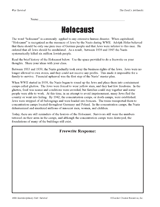
Students read a short history of the Holocaust and then share their responses.
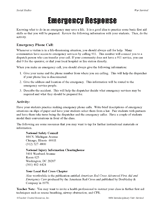
Knowing what to do in an emergency may save a life, as students learn in this printable.
ACTIVITIES
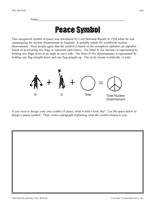
The universally recognized peace symbol was created as a call for nuclear disarmament, as students learn in this…
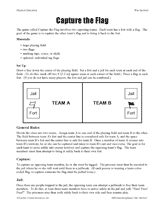
Teach your students the rules and strategy for playing Capture the Flag.
MAPS
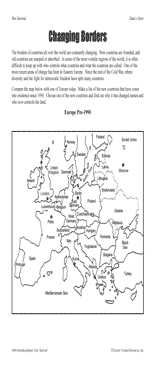
Students examine changing boundaries using a map of Europe, pre-1990.
Students explain why a free press is critical during times of war.
Students learn common ways to make water safe for human consumption.
The best way to handle a disaster is to be prepared, as students learn in this printable.
Includes role-play activities that help reinforce learning! Students learn basic treatment for common wounds and medical…
Students are asked to detail a survival plan.
Students research and write about Polynesian culture.
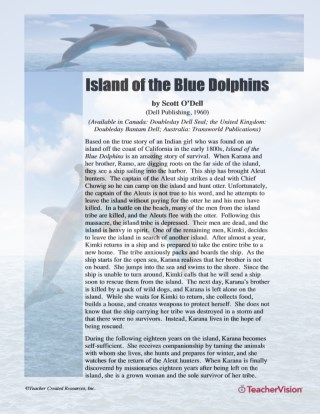
Explore extension lessons and activities related to Island of the Blue Dolphins, the classic children's novel. Use this…
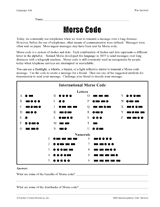
Use this resource with your students to help them understand there is a secret abbreviated language they can use to…
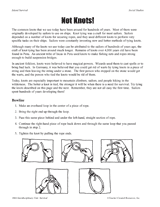
Learning to tie a variety of knots could prove useful in any number of situations.
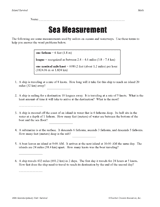
Students explore measurements that are used by sailors on oceans and waterways.
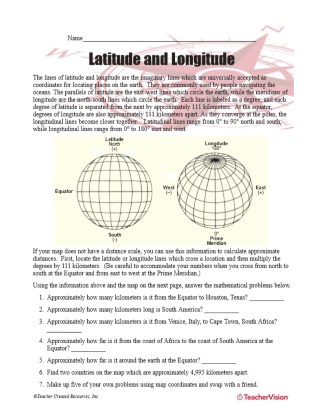
Latitude and longitude are imaginary lines universally accepted as coordinates for locating places on Earth. Students…
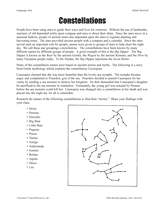
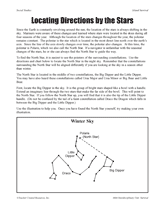
Students explore the stars as a useful navigational tool.
This critical thinking activity asks students to generate ideas for how to find a source of fresh water.
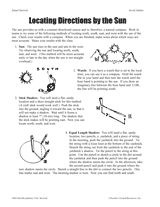
Students explore using the sun as a directional source -- a natural compass.
Students learn about the North Star as it is used to navigate when no landmarks are available.
Students research a list of animals in terms of how they adapt to a cold climate.