WORKSHEETS
Students use a viewer and then illustrate what they saw in the daytime sky.
Students draw objects that they might see in the nighttime sky.
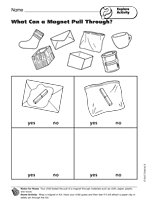
Students test a magnet's pull through cloth, paper, plastic, and wood.
Students draw pictures to show that magnets push and pull each other.
Students draw and label two landforms that are in their community.
Students draw and label a body of water.
Children illustrate how water flow changed each time it was poured over a landform.
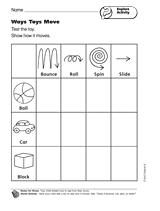
Students test toys to see how they move.
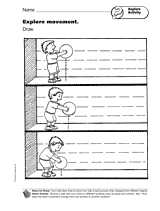
Students draw lines to show how high a ball bounces in three different scenarios.
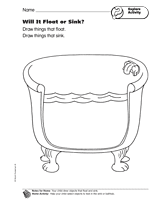
Students draw objects that float and objects that sink.
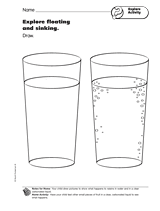
Students draw pictures to show what happens to raisins in water and raisins in seltzer.
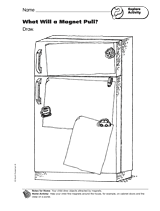
Students draw objects that are attracted to magnets.
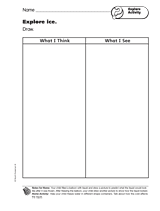
Students draw a water balloon, both before and after it is frozen.
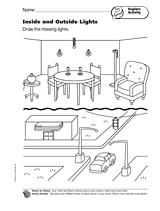
Students identify missing indoor and outdoor lights, and draw them.
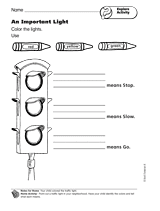
Students color the traffic light: red for stop, yellow for caution, and green for go.
Students explore what happens to a piece of paper with a block on top that is left in the sun.
Students draw the shadow shown when a flashlight is shined on an object.
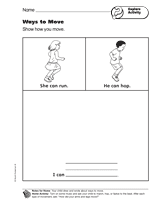
Students draw and write about different ways to move.
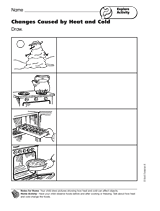
Students draw pictures showing how heat and cold can affect objects.
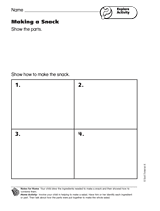
Students draw the ingredients needed to make a snack, and then show how to combine them.
Children explore toys, then draw a toy and point arrows at the parts that move.
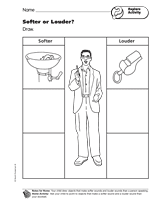
Students draw objects that make softer and louder sounds than a man speaking.
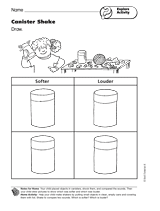
Students place objects in canisters, shake them, then draw pictures of what they think is inside.
Students listen to sound producing objects, with and without cylinders, and then determine which object is the loudest.