WORKSHEETS
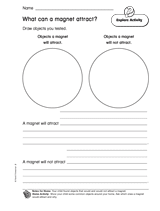
Students find objects that will attract a magnet, and others that will not.
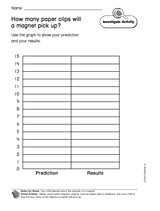
Students learn about the strength of a magnet by testing how many paper clips a magnet can pick up.
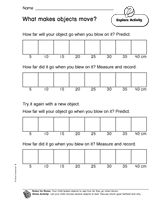
Students predict and test how far objects will move when blown on.
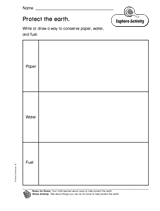
Students describe in writing and drawings different ways to conserve paper, water, and fuel.
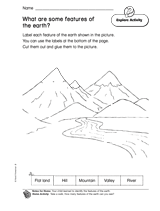
Students label the geographical features shown in a picture: a hill, a mountain, flat land, a valley, and a river .
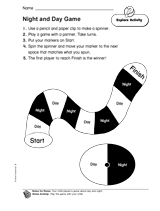
Students play a game about day and night.
ACTIVITIES
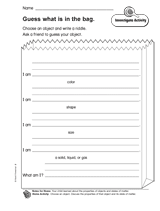
Students choose an object, write a riddle about the object, and ask a friend to guess what their object is.
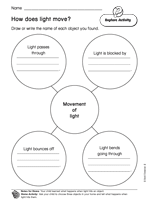
Students explore what happens when light hits different objects.
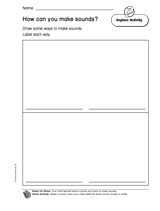
Students draw and label ways to make sounds.
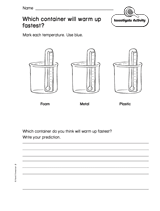
Students place metal, foam, and plastic containers of water in the sun, and investigate which container warms up the…
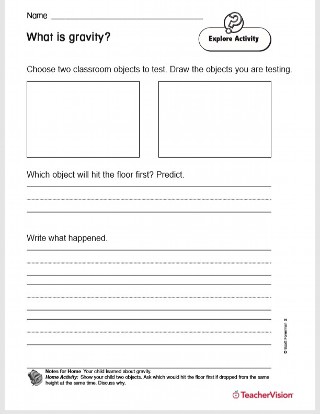
Students choose two classroom objects, predict which one will hit the floor first when dropped, and then test their…
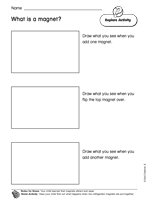
Students explore how magnets attract and repel.
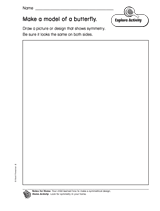
Students draw a picture that shows symmetry.
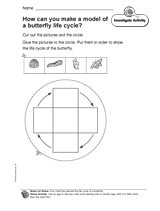
Students glue in pictures that show the life cycle of a butterfly.
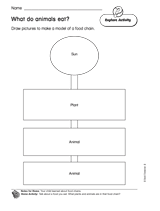
Students draw pictures to make a model of a food chain.
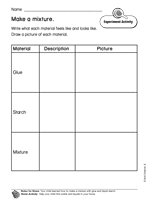
Students describe and draw pictures of glue, starch, and a mixture of glue and starch.
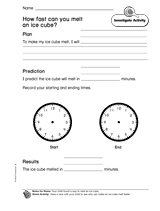
Students find a way to melt an ice cube, and record the time it takes for the ice cube to melt.
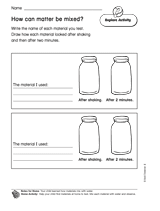
Students choose materials to mix in a bottle. They then observe the mixture right after it has been shaken, and again…
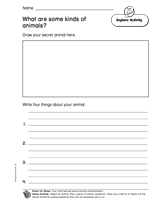
Students learn about animal characteristics.
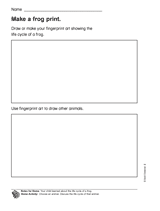
Students make fingerprint art depicting the life cycle of a frog.
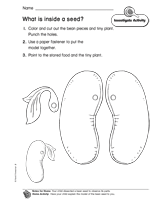
Students dissect a lima bean seed to observe its parts.
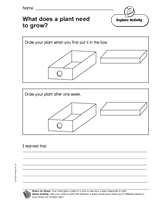
Students grow a plant in a box to see how a plant responds to light.
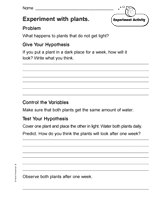
Students learn what happens when a plant does not get light.
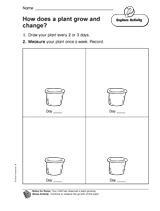
Students observe a plant growing.