LESSON PLANS
Students will plant various seeds to observe them grow.
In this art activity, students use a variety of seeds to make pictures.
Teach students about plants by dissecting a seed in this science activity.
In this activity, students will learn how to identify seeds.
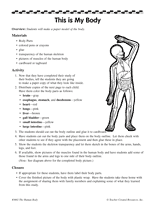
Students will make a paper model of the body.
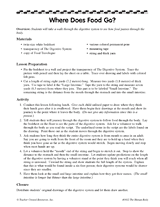
Students will take a walk through the digestive system to see how food passes through the body.
WORKSHEETS
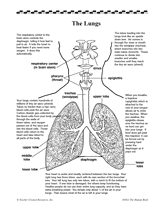
Print a worksheet that shows a diagram of the lungs and explains how each part functions.
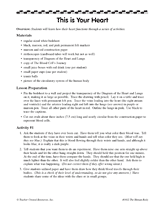
Through a series of activities, students will learn how their heart functions.
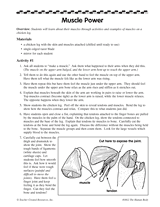
Students will learn about their muscles through activities and examples of muscles on a chicken leg.
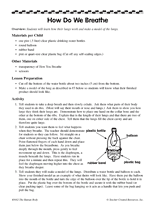
Students will learn how their lungs work and make a model of the lungs.
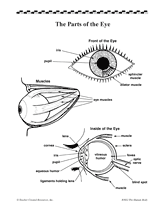
This diagram labels each part of the eye.
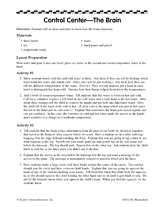
Present these activities to teach students how the brain functions.
Use this lesson and worksheets to teach your students about primary and permanent teeth. Students will learn about their…
Students will study bees in the wild.
Students will make imaginary insects which have the essential characteristics of an insect, such as six legs and three…
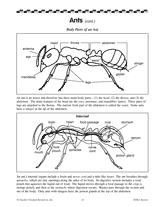
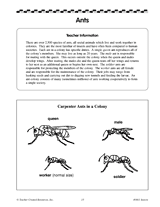
Find the internal and external parts of an ant labeled on this printable worksheet, perfect for your science lessons on…
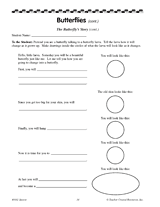
Pretend you are a butterfly talking to a butterfly larva. Tell the larva how it will change as it grows up. Make…
Science activities that involve observing, writing, and drawing ants.
Students will make observations of ants being placed in a commercial habitat.
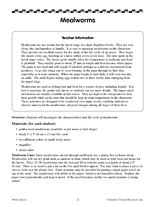
Students will investigate the characteristics and life cycle of mealworms.
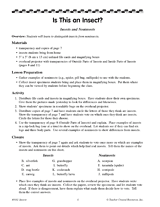
Students will learn to distinguish insects from non-insects.
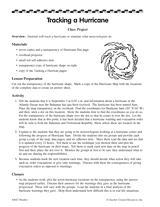
In this simulation, students will track a hurricane in the manner of a meteorologist.
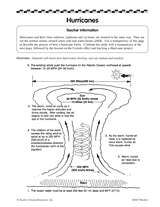
Teach students how hurricanes develop and how these powerful storms are named.
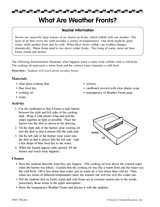
In this activity, students will learn about weather fronts. A lesson plan is included.