1f2n3n

FREE Lesson Plan - 1st of 3 Free Items

View 2 more resources at no cost, and then subscribe for full access.

A Play about Sacagawea

Grade Levels: 3 - 6

One of the most famous Native American women of the nineteenth century was Sacagawea. She had an interesting life story that students will turn into a short play.

Objectives

  • Students will create a play based on Sacagawea's life.

Materials

  • Background information below.

Procedures

  1. Have students read the background information on Sacagawea's life.
  2. Divide the students into cooperative groups.
  3. Have students generate a list of questions they need to have answered before they can begin writing.
  4. Encourage them to use reference materials and the Internet.
  5. When students feel sufficiently prepared they are to begin writing their plays.
  6. Allow students to read and/or act out their plays to an audience.

Scene l: Sacagawea was born in approximately 1787 to a Shoshone woman who was part of a Native American tribe that lived in the Rocky Mountain area of Northwestern United States. Her name means "Bird Woman" in the language of the Shoshone.

Scene 2: When she was a young girl, she was captured by an enemy Native American tribe called the Hidatsas, and sold to a Missouri Mandan Native American.

Scene 3: Sacagawea was then sold to a French Canadian fur trader named Touissant Charbonneau. Charbonneau married Sacagawea (she was at this point 16 years old) and she became pregnant.

Scene 4: When Sacagawea was about nine months pregnant, her husband was hired by Lewis and Clark (sent by President Thomas Jefferson to explore the Lousianna Purchase) to be an interpreter. They were in the North Dakota area in the winter of 1805 where they all settled down to wait out the long, cold winter before setting off west again.

Scene 5: Sacagawea's baby was born in this North Dakota camp during the winter of 1805. She named her little boy Jean Baptiste, for his father, but called him Pompey.

Scene 6: In the spring of 1805, Lewis and Clark set out west again. They were trying to find a water route to the Pacific Ocean and were following the Missouri River westward. Charbonneau and Sacagawea, with Pompey strapped to her back, traveled with them. Lewis and Clark soon found out that Sacagawea was much more help than her lazy husband!

Scene 7: The exploring party followed the Missouri River to its source in the foothills of the Rocky Mountains. By this time, it was late summer of 1805. Winter would soon set in and the explorers realized that there was no water route to the Pacific. They had to get out of the mountains or they would freeze and starve to death. They needed horses to do this!

Scene 8: A group of Shoshone Native Americans visited the explorers' camp. Could Lewis and Clark persuade the Shoshones to sell them some horses? As soon as Sacagawea saw the leader of these Native Americans, she burst into tears. The man, Ca-me-ah-wait, was her brother from whom she had been kidnapped many years ago. They embraced in joy.

Scene 9: Lewis and Clark got their horses from the Shoshones! They all were able to continue their expedition westward, cross the Rocky Mountains, and reach the Pacific Ocean.

Scene 10: On their way back, Sacagawea and her husband were left off at their Mandan village.

Scene 11: Sacagawea lived to be almost 100 years old! She died in Wyoming on April 9, 1884. Her son, Pompey, also became a famous guide for European American explorers.

Excerpt from: Multicultural Activities for the American History Classroom.


Join TeacherVision
for $39.95 a year and start receiving benefits today!
Free 7-Day Trial

Highlights

November Events

Find educational resources for every day in November. Fill your November lessons with activities for Thanksgiving (Nov. 27).

Math Printables

Browse our most popular math resources in our Printable Rulers & Protractors Slideshow and Number Lines & Place-Value Charts Slideshow.

New Resources

Not only have we added new printable books for Maps & Activities and The Human Body, but we've also focused on new classroom management resources. Try our Homework Excuse Form, Quieting the Class Quickly, Handling Misbehavior During Instruction, and Checking Student Progress in Homework. Take a look at all the new pages added to TeacherVision.

Walden Forums

Wondering about online education at Walden? Get answers to your questions, meet faculty, and learn what it's like to be a Walden student. Click here to check out our free Walden Forums!

2009 Educators' Calendar

There's something worth celebrating every day! Find fun and educationally relevant holidays, events, and celebrations for each day of the year.

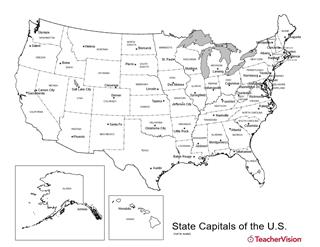
Printable Maps

Enrich your lessons with our collection of printable world maps depicting continents, countries, capitals, political boundaries, lines of longitude and latitude, climate zones, oceans, land forms, and more. Plus, browse our collection of Unites States maps.

Daily Printables

Add a TeacherVision widget to your blog, personalized homepage (such as iGoogle or Pageflakes), or social networking sites (such as Facebook). Our widgets feature a different fifth-grade language arts printable or fourth-grade math printable for each day of the year.

Discussion Guide: The Mayflower and the Pilgrims' New World

The teacher's guide for The Mayflower and the Pilgrims' New World, from Penguin Young Readers, is filled with discussion questions, research assignments, and writing activities to engage your students in early American history. Enjoy this book with your students around Thanksgiving or when introducing them to the Colonial Period and Native American History.