1f2n3n

FREE Lesson Plan - 1st of 3 Free Items

View 2 more resources at no cost, and then subscribe for full access.

The Habitat of a Termite

Grade Levels: 3 - 5

Objectives

  • Students will use vocabulary related to termites.
  • Students will learn about the habitat of termites.
Materials

Procedures

  1. Introduce key vocabulary: architectures, diversity, environment, fungus, insulators, organism.
  2. Have students visit an educational website about termites. Give them time to read the text and view pictures, and then encourage students to write one or two questions they have about termites and termite mounds.
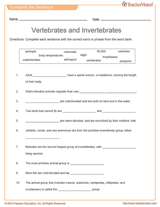
  3. Ask students to complete the The Habitat of a Termite Crossword Puzzle using the information found on the website.
  4. Students may complete this activity individually or in pairs.
  5. Set up a time when students can come together to share their questions and activity sheets.
  6. Invite students to suggest where they might find answers to their questions.
  7. You might wish to collect the questions and have students work on finding answers during their scheduled computer time.

Assessment

Find a variety of assessment techniques to use with this lesson.

Extension Activities

  • Choose from a large collection of cross-curricular activities for all grade levels.
  • Have student explore websites about bees so they can learn about the physical and social infrastructure of a bee's hive – another example of an amazing insect home.
  • Another interesting insect is the ant. Tell students to explore websites about ants to find what an ant's habitat looks like and to learn what these insects actually do besides invade your picnic basket! Have students illustrate a job that both an ant and a human perform. Using a sheet of paper folded in half, ask students to show an ant performing the job on one half and a human doing the same job on the other half.
  • Students can work together to create a chart or diagram that shows how a termite mound, a beehive, and an ant nest are alike and how they are different.


Standards Correlations

National Science Education Standards
http://books.nap.edu/html/nses/html/index.html

Students develop an understanding that:

  • each plant or animal has different structures that serve different functions in growth, survival, and reproduction.
  • an organism's patterns of behavior are related to the nature of the organism's environment.

National Educational Technology Standards
http://cnets.iste.org/index2.html

Students:

  • use technology tools to enhance learning, increase productivity, and promote creativity.
  • demonstrate a sound understanding of the nature and operation of technology systems.


Join TeacherVision
for $39.95 a year and start receiving benefits today!
Free 7-Day Trial

Highlights

2008 Summer Olympics

Celebrate this summer's Olympic Games in Beijing, China, with our resources, activities, and lessons.

Teaching about Natural Disasters

The world has suffered two natural disasters this May — Cyclone Nargis in Myanmar and the earthquake in China. These tragedies may have your students wondering why such large catastrophes occur. We have resources to help you explain earthquakes and cyclones, and for dealing with the subjects of death and crisis with your class.

July Events

Find educational activities for every day in July. Take a look at our Summer Activities Slideshow for our favorite summer-themed activities, lessons, and printables.

Sign up for our Great Stuff for Teachers newsletter to keep up-to-date on all of our seasonal lessons and printables.

New Customizable Printables

Easily create personalized hall and office passes or teacher stationary with our customizable classroom passes and notes. Prepare for substitute teachers, field trips, parent-teacher conferences, and more with our customizable charts and forms.

Drama Resources

Explore our drama resources – from Shakespearean plays to The Miracle Worker to Readers Theater – to widen your curricular focus. Students will enjoy the change of pace that putting on a classroom play will bring!

ADD/ADHD Resources

From frequently asked questions to assessment accommodations, these articles and resources will help you to deal with the special nature of students with ADD/ADHD.