Explore inventors and inventions with your students by using lessons and printables to discover a world of unlimited possibilities. There are plenty of hands-on science activities to encourage creativity and engage students of all ages in learning. From catapults to artificial hearts, you'll find a variety of reading passages about the history and people behind innovations in technology. Additional resources include art activities, puzzles, and timelines.
Whiteboard Compatible Mini-Lessons
Enhance your teaching strategies and increase students' learning with these mini-lessons and slideshows. Teach your students key science concepts such as the difference between a discovery and an invention with these whiteboard compatible lessons.Printables
Choose from our list of printables to enhance your lessons and help your students' understanding of inventors and inventions. Includes a short biography and comprehension questions, reading warm-ups, a student created a "kite-shaped" book, and more.- Walt Disney Biography: A Nonfiction Reading Warm-Up
- If My Calculator Could Talk!
- Helen Keller
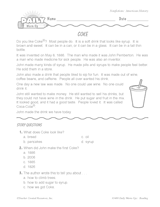
- The Invention of Coca-Cola Reading Warm-Up
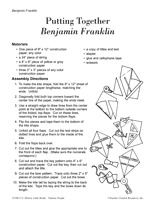
- Benjamin Franklin Little Book
- Henry Ford Biography: A Reading Warm-Up
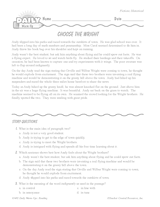
- The Wright Brothers: Historical Fiction Reading Warm-Up
- More Inventions Printables
Lesson Plans
Our Lesson Plans will help students understand inventors and inventions with activities such as inventing a sport, independent research, and using the internet to learn about inventions. Objectives, procedures to follow, and extension activities are included.Digital Books
Expand your lessons with these Digital Books about inventors and inventions, and increase your students' knowledge. Includes information about simple to complex inventions, the development of various inventions and how they are used in today's world.References
Refer to our resources on inventors and inventions to enhance your lessons. Information included in the references covers inventions by women and African-Americans, and more.- Women Inventors
- History of Chopsticks
- List of Firsts for U.S. Cities
- Biographies of African-American Inventors
- Booker T. Washington
- More Inventions References
Games & Puzzles
Increase student interest and learning in inventors and inventions by using our games and puzzles. Includes cooperative learning groups, reading passage with cross-word puzzle, vocabulary and definitions game, and more.- Now or Long Ago?
- The Modern Street-Cleaner Puzzle & Reading Passage
- Ingenious Inventors Match
- Individual Room Temperature Controls Puzzle & Reading Passage
- Timeline: The Early Years of Video Games (1889-1972)
- More Inventions Games & Puzzles
Inventions Resources for Women's History Month
Help students learn about inventors and inventions during Women's History Month with these resources. Included resources cover women in the STEM field, reading passages with comprehension questions, a book of printable worksheets, and more.- Women in Science, Technology, Engineering & Mathematics
- The Modern Street-Cleaner Puzzle & Reading Passage
- Sarah Boone Coloring Page
- Women Scientists & Inventors Printable Book (Grades 4-8)
- Famous Firsts in Aviation
- More on Women's History Month
Inventions Resources for Black History Month
Add to your lessons on African-American inventors and inventions while increasing student learning by using these resources. Includes student created book, short reading passage with coloring pages, and more.Art, Music, Drama, & Inventions Connected
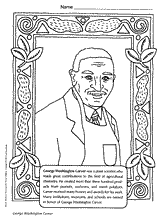
Incorporate the arts into your lessons on inventors and inventions to increase student interest and learning. Our resources include drawing activities, inventing new names for crayon colors and designing a new box, along with inventing a new invention and documenting the process.- George Washington Carver Coloring Page
- Back to Nature?
- Sarah Boone Coloring Page
- What's in a Name?
- My Invention Book
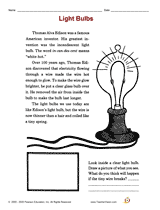
- Light Bulbs
- Sell It Like It Is!
- More Inventions Activities for Art, Music, & Drama
Inventions & Mathematics Connected
Interconnect mathematics into your lessons on inventors and inventions to help student skills and knowledge. Activities include inventing new names for crayon colors and designing a new box, creating a timeline of famous inventions, then solving math problems, and more.- Make an Invention Time Line
- What's in a Name?
- Literature & Math: Stories About Time
- When Did That Happen?
- More Inventions Activities for Math Class
Inventions Resources for Language Arts
Choose from these activities to help students expand their knowledge about inventors and inventions using reading. Activities include reading warm-ups and passages with comprehension questions, along with an assessment of vocabulary words for inventions.- Invention of the Cell Phone: A Reading Warm-Up
- The Wright Brothers Reading Warm-Up
- Introducing Inventions Multiple Choice
- The Modern Street-Cleaner Puzzle & Reading Passage
- Invention of the Cotton Gin: A Reading Warm-Up
- History of Marshmallows Reading Warm-Up
- Invention of the Airplane: A Reading Warm-Up
- More Inventions Resources for Language Arts
Science & Inventions Connected
Teach your students about inventors and inventions in your science lessons and capture their interest. Includes a reading passage about robots, designing and drawing a flying machine or any machine using materials supplied, and more.- Famous Firsts in Aviation
- Become an Inventor
- Rev Up Your Veggies: A Physical Science Activity
- Classroom Catapults
- Science, Technology, and Society: Robots in Space
- Thomas Edison Revisited
- Invent a Flying Machine
- More Inventions Activities for Science Class
Health, Safety, & Inventions Connected
Create interest in your students about inventors and inventions with these resources. Includes creating, making, and racing cars using vegetables, inventing a dessert with a partner, along with learning about bacteria.- Rev Up Your Veggies: A Physical Science Activity
- The Microwave Oven
- A Frozen Delight: Making Ice Cream
- A Chilling Experience
- Invention of the Popsicle Reading Warm-Up
- What Are Some Bacterial Diseases?
- More Inventions Resources for Health & Safety
Inventions Activities for Social Studies
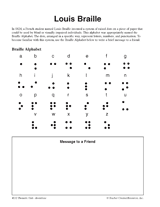
Explore connections with inventors and inventions using these social studies resources. Includes a mini-book of inventors, coloring pages, reading about Louis Braille and practicing using the Braille alphabet, and more.- My Book of Ingenious Inventors
- Thomas Alva Edison, Inventor
- Gallery of DK Digital Books for Social Studies
- Garrett Morgan Coloring Page
- George Washington Carver Coloring Page
- Famous Firsts in Aviation
- Louis Braille
- More Popular Inventions Activities for Social Studies